Monday, 30 August 2010

Traffic Stack

Perth is growing fast, threatening what we value most. Just in case we needed reminding, today’s West has three headlines about this:

A further recent headline points out that by continuing to just spread outwards we are building a dysfunctional city. Environmental damage, increased use of cars and longer distances for provision of water, power and sewerage make the outlook for Perth quite dismal.

Essentially, when we say at public meetings that we want the City to remain as it is, we do nothing and thus contribute to destroying what we love. South Perth's recent City Visioning exercise helped us describe the features that we do want in our future. The challenge now is to use this Vision to plan for a City that keeps these attributes while accommodating rapid growth.

We have a number of community forums in the near future. My hope is that we can use these to work towards what we do want in our future, not just to protest against change.

Friday, 27 August 2010

Canning Bridge Bus Turnaround

Canning Bridge area residents heard on Wednesday night about a new plan for bus movements. Increasing popularity of buses and the train service have meant that the bridge and facilities are often at maximum capacity. Buses are clogging the interchange area and the U-turn arrangements are confusing at best.


Figures show that use of public transport in Perth is growing rapidly, faster than in any other Australian city. Plans to expand Curtin Uni to thirty thousand students will create even more local demand. Freeway and city vehicle congestion continues to make public transport an even more popular option.

In a twenty- year time frame we’ll need a seriously re-planned facility here. Right now, we need a way to handle more buses. South Perth planners, working with Stage agencies, have drawn up a design to take the turn- around off the bridge. A new facility, much- used in Europe, UK and USA, known as a ‘dog- bone roundabout’ is proposed. (Here’s one from Holland.)

The proposed location of this is in the space to the north- west of the current interchange area. Buses would enter the dog- bone, drop off their passengers, turn around and then pick up new passengers on the other straight side of the loop. A short overhead walkway would connect with the rail station. All this would get pedestrians and buses safely out of the bridge interchange, a crowded area today.

The proposed vision for this goes to Council next month; it would then move to design stage for detailed planning.

We need a solution, for now and for later. Buses and trains are increasingly popular. There are way too many cars used every day. Our challenge is to plan our transport system so we don’t even think about using a car for most journeys.

The Mayor of South Perth tells me that there will be time for residents to have a say about this at Council’s briefing night on 21 September. One of my concerns would be about ease and safety of pedestrian access from both South Perth and Melville. If you’d like to contribute, how about talking with your neighbours and contacting the City in advance to get a representative on the agenda list?

Wednesday, 11 August 2010

Cycle Path Update

Wow, didn’t that get some responses? Heaps of emails and calls about the new cycle way on Sir James Mitchell Park, with bouquets and brickbats. I also realised that I had upset the engineer who designed the path and am embarrassed that I did so. My apologies are offered right now.

I have also found that the path was intentionally designed as a “shared recreation path,” with lots of pleasant meanders, not as a transit way. This of course leaves us with the issue that hundreds of people are now using it as a transit way.

Right across Australia cities are building bike transit ways and finding them used beyond expectation. This is a tremendous outcome; every cyclist has consciously not used motor transport. We have less road congestion, less pollution, less parking needs, smaller carbon footprint. I am so happy about this.

Now, lets use the popularity of this facility to really push for completion of the Perth Bicycle Network,  making a safe, efficient link to and around all points of the compass in Perth.

Canning Bridge Light Rail Info and Consultation

A reminder that on Thursday 12 August at 7 pm. Hon Lynn MacLaren MLC, Member for South Metropolitan Region and Peter Newman, Professor of Sustainability at Curtin University and on the Board of Infrastructure Australia, will present the latest plans for light rail in our region.

LR1

You’ll be able to see examples of systems operating around the world, to see plans for the network and to talk about how to make this work for us. The event will be at the Canning Bridge Senior Citizens Centre, 64 Kishorn Road, Mt Pleasant. Just click the map to expand it. I recommend parking on the Esplanade or in the Centre car park on the river side of the building. The best road access is from the Esplanade, turning off Canning Highway beside the Shell service station. Coming from Fremantle you could turn right at the previous traffic lights by Thai Corner and that place with the Arches. There is plenty of room inside for bicycles.

railforum

I also have some discussion points around plans for redevelopment of Canning Bridge precinct, ahead of the forthcoming design presentation.

See you there from 6:30 pm on Thursday. Feel free to add your thoughts below by clicking on “Comments”

Sunday, 8 August 2010

Cycle Way a Success

South Perth’s new cycle way on the foreshore is getting plenty of use from families on Sunday. However, for transit riders who try to use it daily the path is significantly more dangerous.
If you are designing a new cycle way for your city you might not do it this way. You might also get some cyclists involved in the design process. The problem here is that the path contains numerous very sharp bends. Both the Mayor and the CEO say that “We have to slow these cyclists down.” Cyclists maintain the opposite view.
There are two sort of cyclists- recreational slow users, out for a ride with children and faster transit cyclists on their way to and from work, using a bike instead of a car. We want to encourage both and must plan for both.
The new winding, bendy path is a pleasure to ride along at a leisurely place while you chat. It is a hazard to use if you are a serious cyclist. The bends are so tight that you must stop pedalling and lift your inside pedal. After dark and before dawn you cannot see where the path goes and risk serious injury. In each case, a cyclist with their shoes clipped or strapped to the pedals has no way of preventing a hard fall.
The unintended result of this is that transit cyclists will be discouraged from using the path and will:
  • choose the old path instead, the one with pedestrians, because it is straight
  • choose to use their cars, so losing the benefits of cycling: less road congestion, less pollution, less parking space, better health
  • ride on Mill Point Road, so being in an environment of higher closing speeds and with much more serious accidents. We really don’t want to have bikes and cars mixed together.
Like the helmet law, this well- intentioned act will result in overall lower benefit to the community. The unfortunate attitude of wanting to slow the cyclists is very controlling. We should do the opposite and facilitate easy transit. Wanting to slow cyclists is like wanting to put speed bumps on the freeway- dangerous and way too controlling.
It seems that our engineers did not consult with users or with the Bicycle Transport Alliance. They did not understand that transit users have foot straps and clips that fasten their feet to the pedals. They certainly did not think of users after sunset and before sunrise, of which there are very many. They definitely did not understand that to get cars off the road we must make bike travel easy and that bike travel is not the same as a recreational doddle with the grandchildren.
C’mon! We say we are good at consultation. Cycling is fun and is a perfectly viable alternative to driving for many trips. We can do this better and this cycle way must be modified now and made safe.
Have your say. Just click on “Comments” below and log in as Name (preferred) or Anonymous, or email me and I’ll post your comments for you. What you say makes a difference.

Thursday, 29 July 2010

Open Data

We have gone to sleep. Not even dead dolphins have caused us to blink. A few press reports of events, the odd official voice about a study somewhere. This should be a smack in the head for us all- wake up!

The world needs our care. We have the ability to preserve, or destroy this patch of paradise. To care for our country we need to make decisions, daily. To make good decisions we need good data and access to that data. Decisions without facts are probably bad decisions. What gets measured, gets managed. However, it is difficult to get to the facts around our lives.

Things are changing. I believe that it is important that we measure these changes so we know what is happening and how to respond. Today we read that the past decade was the warmest on record. If we are to respond usefully we really need to know about what else is happening, in detail

We talk about open government. We congratulate ourselves when we fill our web sites with annual reports, budgets and attractive graphics. Here in Western Australia we are just not good enough at collecting data and making it available. If I want to see how much dieldrin, or petrol, or copper is in the Swan River water, and what that level has been each year, I just can’t get it. The best I find is some PDFs or departmental reports.

However, pictures of information are not actually data. To get a time series of say the water use of my city over twenty years I have to find and open up twenty separate documents and collate the data. This is not good enough.

The USA has developed a web site called data.gov where vast amounts of data are totally open for public access. Even our national databases are available at data.australia . Here in the West we have nothing like it.

Some things we might like to know about could include:

  • traffic on the freeway
  • energy use hour by hour for each year
  • number of staff employed by the City
  • number of single- parent households
  • pollution indicators in the Swan River, e.g. chromium, phosphate, pesticides

The data is important and the time series of data sets is vital. Innovative people can use this sort of data to suggest useful ways to adapt to the changes we see and measure. By constructing ‘mash- ups’ of data sets, new insights can appear.

Let’s really live the values of open government. Let’s have the facts, out there, so we don’t have to guess what is happening!

Thursday, 22 July 2010

Light Rail and Canning Bridge Forum, 12 August

Community members from both sides of the river and anyone interested is invited to attend a community forum on Light Rail and new developments in the Canning Bridge Precinct. We’ll meet at 7 p.m. on 12 August 2010. The venue:  64 Kishorn Rd Mt Pleasant 6153m, an easy and pleasant walk from the train or bus stations. Click the map to see more.

Map picture

The event is organised by the WA Greens Party. Guest speakers will be Greens Senator Scott Ludlam and myself, Peter Best, Greens candidate for Tangney. Both of us will arrive fresh with the latest updates after a Green Transport workshop at Curtin Uni. We will also have some information from briefings about recent planning sessions between the Melville and South Perth Councils and GHD consultants.

Perth ranks bottom of the list of sustainable cities in Australia. We use our cars to drive everywhere, mainly because the city is designed that way. Our roads and parking are becoming more congested, we use more energy, we lose more time, we pollute the air. The Greens have a comprehensive policy on Sustainable Transport here.

Perth can be so much better when we keep our cars for special occasions. We will be able to do this when we live close to good, safe public transport. By changing the way we live and the way we travel we can make a difference to our lives and our planet. Light Rail is the modern version of a tram. These systems are coming into popular use around the world.

Perhaps this change is not for you personally but it certainly will suit the next generation. It is time to begin planning for these changes now. Recent Visioning programs by the Councils have made it clear what we’d like our city to be like. Now it is time to begin turning that vision into reality. Scott and I will be here to listen to your thoughts, to provide some updates and to answer your questions.

We have had quite a number of public meetings in this area. Previous meetings have been hosted by the Councils; this one is hosted by the Greens. Here’s an opportunity to keep up to date and to make sure you have your say. If you can’t make it just click on “Comments” below and log in as Name (preferred) or Anonymous, or email me and I’ll post your comments for you. What you think does matter.

Thursday, 8 July 2010

Climate Adaptation

Last week I attended the Climate Change Adaptation conference in Queensland. A thousand people were there, from all over the planet- Fiji, Korea, China, Bangladesh, UK, Holland, Finland, Senegal, South Africa, Brazil, Mexico, USA, Canada and many other places. There were high- powered people from the IPCC, United Nations officials, researchers, doctors, field workers and community representatives. For three days we discussed some science, many reports from many places, of a changing world, and much about how people respond to this change.

A Japanese team showed the advance northward, year- by-year of a species of a mosquito that carries dengue, as Japan becomes warmer. A Canadian woman spoke of increasing deaths through cold of homeless people in cities, as increasing daily variability makes it more difficult for social services to predict temperatures. A Tunisian field officer told us about the advance of desert sands. Tim Flannery spoke eloquently, as always, of the progressive disappearance of a small, white possum, from hilltops in North Queensland. This creature has a high sensitivity to temperature changes.

A key theme was one of understanding that times are changing, of a sense sometimes that it is caused by someone else far away, sometimes of a fatalistic feeling and of a common sense of powerlessness. A further emotion was that Copenhagen had failed to unite people and nations in a course of action, that it was now up to communities to take things into their own hands. That perhaps they couldn’t change the world but that they could certainly make a difference locally. A wide range of people spoke of responses such as adapting cropping practices, changing building methods, policy development, education and most of all about community engagement.

The oft- repeated theme was that it didn’t matter how good the science was until the community connected with the issues, identified the problems and then developed and committed to solutions. By identifying a specific threat and working on a solution, communities become better connected, healthier and more resilient.

Bringing the community together through climate change adaptation addresses our policies and philosophies of Social Justice, Participatory Democracy, Peace and Sustainability. Our objectives around Climate Change, caring for people and managing water can be very much part of the way we adapt our societies to the pressures of climate change.

We can add to the focus of a low Carbon footprint, influencing lifestyle and technology choices. We can promote WA’s bountiful wind and solar assets. By introducing Adaptability we can bring on board another part of our society, those who so far have not engaged with Climate Change values.

A feature of humanity is that we are adaptable. The original inhabitants of Australia have been adapting to change for a thousand generations before us, since the last ice age allowed them to migrate overland to Australia and to all that has happened since that time.

I believe that the community can harness our ‘can do’ attitude, with focus on Adapting to Climate, to bring change to society. By focussing on opportunity we can build on the optimistic nature of Western Australians.

We can encourage people to live mindfully, to be conscious of the implications of daily decisions, as individuals and as community leaders, to join together and to make a better society.

In my own work, over many years, in school, Uni, at work, in the community, in Africa and Australia, I have always been able to bring change by motivating people in shared spirit, to think in terms of ‘we’ and of opportunity and optimism. At a Citizenship ceremony on Monday night this week such spirit was very plain among the thirty- nine new citizens; they spoke of this spirit as what attracted them to Australia.

Conscious care for the world around us is as much a part of working with community residents on the Ranford wetlands, as it is with cleaning up the Swan river banks or evaluating major development projects. Thinking about how we adapt our community to the changes we see happening takes away the politics of Climate Change and lets us make decisions in a time of uncertainty.

I hope we can invite as many people as possible to join in, to participate, in caring for all who live on this planet.

Tuesday, 6 July 2010

Spring Time Composting

With Spring only a few months away we can begin planning our own personal land- care projects. Composting can reduce water use, raise productivity, increase soil carbon and improve the structure of soils. We can reduce reliance on purchased products, reduce waste, reduce our energy footprint and enjoy the process. Home gardening reduces food miles too.

Last week I attended a Climate Adaptation conference which reminded me of some ways that we can take personal responsibility for our own patch of the planet. (More on this coming soon)

In Perth about sixty percent of our household waste is organic. The metropolitan area generates about 1.2 million tonnes of organic waste each year, and much of this waste goes to landfill. Organic waste is a valuable resource that can be used to help improve soil quality. Organic waste can be recycled by using it as mulch, as compost, or in a worm farm.

The Dept of Environment has a web site of useful composting tips. Another really good blog site for compost tips can be found here. For even more information there is a composting course to be held soon; click here for details. There is a WA State commitment to stop burying our waste in our water supply. We can do our bit for this responsible initiative and enjoy the process too.

By the way, just about everything can be recycled in some way. Visit the RecycleIT to find out how and where to recycle specific materials.

Recycling and composting can be a family project. Feeling good about the way we live is important.

Monday, 28 June 2010

Time to Abandon Neighbourhood Watch?

Time to abandon Neighbourhood Watch?

Time to let out the secret that this is one of the safest cities on Earth?

Time to tell older people it's ok to walk to the park? That it's fun for kids to go and play cricket at the oval?

If our mission is to enhance the quality of life of residents then do we achieve the opposite by scaring them with crime stories?

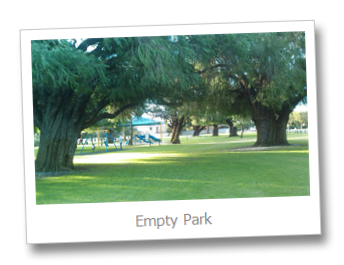
If there is no one in the park then why not just sell it? If we see kids on the street for only fifteen minutes after school then where are they?

If our crime figures have gone down every year since 1987 then why do we not trust our neighbours? If the only figure remaining high is domestic violence what are our social stresses?

Perhaps if we abandoned Neighbourhood Watch then we'd have a barbecue in the park, let the kids swim in the river, invite the widow down the road around for a cuppa.

Perhaps we might find that a social community beats atomised solitude any day. Getting muddy with your friends really can compete with the collective identity of Facebook.

What if we just did the Aussie thing and looked after the place next door when they went to the beach?

Starting right now I'm going to work on a Next Door Day, October 24, when we invite the neighbours over for food, drink and conversation.

Party at my place! and yours too, all over Perth, I hope.

Please feel free to have your say- it makes a difference. Just click on “Comments” below and log in as Name (preferred) or Anonymous, or email me and I’ll post your comments for you.

Wednesday, 23 June 2010

Bush Forever

Here’s some news good enough that it puts a bounce in my day.

After public consultation the State Government has published the new Bush Forever amendment today. As soon as the amendment is no longer subject to disallowance (after 12 sitting days) it becomes legally effective in the Metropolitan Region Scheme.

The purpose of this major amendment is to reserve and create special controls over Bush Forever sites in the Metropolitan area.

image

I’ll provide more detail and comment later. A map of the Perth South areas proclaimed can be viewed here.

Areas included in South Perth are along the Canning River shores beside the Freeway near Mount Henry, at Mount Henry and the wetlands of Manning and Waterford around Bodkin Park.

This makes formal declaration of residents’ passionate belief that this bush should be given special preservation in a time of change.

Saturday, 12 June 2010

Electronic Waste Recycling

Here's a chance to feel good about our rubbish! Instead of landfill your techie bits can be broken down and re- used.

This weekend it's time to drop off the old computer, monitor, mobile phone, TV, Nintendo, fax machine, etc. Sat 12 & Sun 13 June 2010 - 9am-4pm

For locations to drop off your stuff click here.

If you missed this event then  click here for alternative disposal opportunities.

Wednesday, 9 June 2010

Swan River Care

This blog is not about Climate Change, which is complex, long- term, important and in the future. It is about weather, which is simpler, short- term, urgent and happening now.

The Swan and Canning Rivers are loved by this community and are key attractions of Perth. Riverside infrastructure of the freeway and rail line is a vital part of WA’s economy.

Most riverside infrastructure was built in the 1950's to 70's through the Public Works Dept, which no longer exists. The state of our infrastructure is aging, under- capacity and not up to current standards. Basic maintenance costs are increasing with age. The walls are already under stress during high tides, strong winds and storm surges.

Winter storms have long been recognised as a major hazard in WA. The Noongar people moved inland during the cooler months, partly to avoid the weather.

In June 1801, the French explorer Nicholas Baudin felt the full force of a winter gale as he rounded Cape Leeuwin en route to Rottnest Island.

Early settlers were quickly made aware of the dangers of winter gales. The loss of a ship and damage to others during a gale in 1830 threatened the existence of the colony.

In 1934, the Swan River rose almost 6 metres in less than 8 hours at Guildford in response to heavy rain upstream.

In 1955 storms caused massive coastal erosion on Perth's beaches. At Cottesloe not a bit of sand was left anywhere along the seaward side of the main promenade.

In 1963 a strong front caused wind gusts of 150 km/h in Perth.

In 1981 a storm with heavy rain produced widespread damage, Perth being littered with fallen trees, power lines and debris from damaged buildings.

In 1994 one of the most destructive weather events to affect Perth brought a damage bill of $37 million

In 2003 Fremantle recorded a storm surge of 0.8 m, causing the highest tide ever recorded there.

Storms with severe winds can cause heavy rain, but cold fronts with slow- moving cloud bands cause the heaviest total rainfall.

A worst case scenario is to have a peak in gale-force winds coinciding with a high tide, causing a storm surge, pushing East against floodwaters coming down the Swan River.

Our last major floods occurred in 1963 and 1964. In recent decades this has not occurred, thank goodness, because Perth's infrastructure is just not designed to cope with it.

This plot, from the Bureau of Meteorology, shows the frequency of heavy rain in Perth since 1883, in 15- year blocks. It highlights the sudden decrease in heavy rainfall events in the 1960s. It was in this peaceful era that we built our riverside infrastructure. In hindsight, we built in all the wrong places.

Our rainfall pattern is trending towards that of the period when we experienced our worst storms, floods and damage. Our built and natural environments and our economic links are under threat.

These matters affect all 21 Councils on the river banks. Management requires a combined approach of all members. It is not appropriate that it be handled by each Council separately. It is a big issue, it affects the economy of the whole State and we require support from both State and Federal Governments.

WALGA has recognised this and has formed the "C21" group of Councils, chaired by James Best, our Mayor. The Perth Natural Resources Management Group, with which I serve, also acts to coordinate the actions of individual local councils.

These two groups have prepared a business case for combined and effective management of our rivers.

The Swan River Trust budget allocated by State is just way too small for the task ahead.

City of South Perth has presented an Infrastructure Australia submission on behalf of the 21 councils for $83M, based on priorities set by Swan River Trust. We need support of State Cabinet for this.

A further approach will be made for Commonwealth funding later today. An additional submission is being made for $3.5M for repair of seriously deteriorated river walls.

We are calling for support for our combined submission to manage these rivers that we love, that are part of our economy and part of our social fabric.

I hope that when the Commonwealth Heads of Government visit our city next year, 2011, we can demonstrate with pride the management of our rivers.

Please feel free to have your say; it makes a difference. Just click on “Comments” below and log in as Name (preferred) or Anonymous, or email me and I’ll post your comments for you.

Tuesday, 8 June 2010

“Legislation- Ready” Cat

This is Ranger- not only is he super-cute, but he is also micro-chipped (and registered), de-sexed and kept indoors. The owner got him from the RSPCA, who arranged the microchip and de-sexing before making him available for adoption. While he was there, he was also vet-checked and given worm and flea treatments. Tori, the owner, recommends all residents check out the RSPCA when looking for a new pet, as they send out all of their animals "Legislation Ready"

WA State Government is taking steps to require these measures to manage domestic cats. A recent PhD at Murdoch Uni studied the effect of cats on bio- diversity in suburban environments. One interesting fact to arise from the student’s thesis was that owners are generally supportive, being motivated mainly by concerns for safety of their cat, rather than for preservation of native wildlife.

Many Councils already have cat laws. In Darwin, for example, by-laws require cats to be properly contained in the owners’ property, under effective control by the owner, and on a lead or enclosed in a suitable container when away from their home. Stiff fines apply if a cat is captured while ‘at large’.

Swan Council in WA allows residents to trap cats found on their property, and the cat owners don’t have to be told. The City of Swan houses the trapped cats for collection or re-homing; owners have to pay a $100 fine to get their pet back. The Perth Cat Haven – which receives more than ten thousand stray cats each year – believes the laws should make micro-chipping of all cats compulsory.

Increasing numbers of local governments around the country are imposing night-time curfews to minimise neighbourhood nuisance issues and protect native wildlife.

Is your feline friend "Legislation Ready"?

Wednesday, 19 May 2010

Mosquitoes

At a public forum around mosquito issues about fifty residents came to express their concerns about being bitten and about environmental protection. We heard strongly- worded views about the need for personal safety, about concern for native species and about how Council responds to these concerns.

Resident after resident told their story about cycles of mosquitoes in the evenings. Very many people demanded that the City fog the Canning River wetlands regularly. Many felt that the City was not responding to their needs.

After an hour of clearly- expressed views of residents the City’s Manager, Environmental Health outlined the very extensive work carried out over five years. Sebastian’s team, all with Environmental Science qualifications, had trapped, mapped and measured mosquito issues in the area. Sebastian presented a summary of work done and conclusions reached. He also presented a background of control measures already taken and plans for the future.

The second speaker, Department of Health medical entomologist Sue Harrington, provided some scientific background on the 210 species of mosquito in Australia and their breeding, biting and bothering habits. She pointed out that fogging over marine wetlands was illegal and likely to cause widespread fish deaths. Fogging also kills all types of insects- bees, spiders, moths and mosquitoes.

Ms Harrington compared local mosquito levels with those in Capel and the Kimberley, where truly massive concentrations occur. She also suggested that residents live near the river because they value the environment, with its trees, fish and other fauna. In order to sustain these things we value she suggested that we treat the mosquito issue with respect for the whole environment.

One particular control measure Ms Harrington suggested was a naturally- occurring bacteria, widely used throughout WA. Capel has been hugely successful with this measure. They spread this biological agent twice a year, never fog and hardly see a mosquito. Their mosquito management strategy is on their web site. A good thing about this method is that the biological agent does not affect other species.

A third speaker, from Swan River Trust, provided information on wider issues of environmental management. An outcome of the meeting was to set up a residents’ committee to meet with the City and  communicate more about management of mosquitoes.

image

How Can You Assist? (Quoted from Capel)

Mosquitoes breed in STANDING WATER. Standing water can be found in old tyres and other water holding containers, pot plant drip trays, septic and water tanks, roof gutters, domestic ponds, etc. By eliminating these breeding sites you can help to reduce mosquito numbers in your backyard.

You can help eliminate breeding in your backyard:

  • Dispose of all containers which hold water.

  • Keep ornamental ponds stocked with mosquito-eating fish, e.g. goldfish.

  • Empty self- watering pot plant trays once a week or fill them with sand.

  • Empty and clean animal and pet drinking water once a week.

  • Keep swimming pools well chlorinated and filtered and free of dead leaves.

  • Fill or drain depressions in the ground that hold water.

  • Prevent leaking taps which can maintain semi-permanent pools.

  • Avoid over watering lawns. This can lead to high water tables or run off to storm water drains and create permanent pools.

  • Vent pipes on septic tank systems must be fitted with mosquito- proof cowls. Seal all gaps in the lid, and ensure leach drains are completely covered.

  • Screen rainwater tanks and/or add paraffin oil to cover surface.

  • Ensure roof guttering does not hold water.

  • Some plants (especially bromeliads) hold water in their leaf axils. These should be emptied of water once a week.

I look forward to hearing that a collaborative approach has this matter under control to everyone’s satisfaction.