Monday, 28 June 2010

Time to Abandon Neighbourhood Watch?

Time to abandon Neighbourhood Watch?

Time to let out the secret that this is one of the safest cities on Earth?

Time to tell older people it's ok to walk to the park? That it's fun for kids to go and play cricket at the oval?

If our mission is to enhance the quality of life of residents then do we achieve the opposite by scaring them with crime stories?

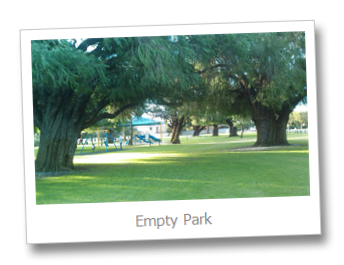
If there is no one in the park then why not just sell it? If we see kids on the street for only fifteen minutes after school then where are they?

If our crime figures have gone down every year since 1987 then why do we not trust our neighbours? If the only figure remaining high is domestic violence what are our social stresses?

Perhaps if we abandoned Neighbourhood Watch then we'd have a barbecue in the park, let the kids swim in the river, invite the widow down the road around for a cuppa.

Perhaps we might find that a social community beats atomised solitude any day. Getting muddy with your friends really can compete with the collective identity of Facebook.

What if we just did the Aussie thing and looked after the place next door when they went to the beach?

Starting right now I'm going to work on a Next Door Day, October 24, when we invite the neighbours over for food, drink and conversation.

Party at my place! and yours too, all over Perth, I hope.

Please feel free to have your say- it makes a difference. Just click on “Comments” below and log in as Name (preferred) or Anonymous, or email me and I’ll post your comments for you.
Wednesday, 23 June 2010

Bush Forever

Here’s some news good enough that it puts a bounce in my day.

After public consultation the State Government has published the new Bush Forever amendment today. As soon as the amendment is no longer subject to disallowance (after 12 sitting days) it becomes legally effective in the Metropolitan Region Scheme.

The purpose of this major amendment is to reserve and create special controls over Bush Forever sites in the Metropolitan area.

image

I’ll provide more detail and comment later. A map of the Perth South areas proclaimed can be viewed here.

Areas included in South Perth are along the Canning River shores beside the Freeway near Mount Henry, at Mount Henry and the wetlands of Manning and Waterford around Bodkin Park.

This makes formal declaration of residents’ passionate belief that this bush should be given special preservation in a time of change.

Saturday, 12 June 2010

Electronic Waste Recycling

Here's a chance to feel good about our rubbish! Instead of landfill your techie bits can be broken down and re- used.

This weekend it's time to drop off the old computer, monitor, mobile phone, TV, Nintendo, fax machine, etc. Sat 12 & Sun 13 June 2010 - 9am-4pm

For locations to drop off your stuff click here.

If you missed this event then  click here for alternative disposal opportunities.

Wednesday, 9 June 2010

Swan River Care

This blog is not about Climate Change, which is complex, long- term, important and in the future. It is about weather, which is simpler, short- term, urgent and happening now.

The Swan and Canning Rivers are loved by this community and are key attractions of Perth. Riverside infrastructure of the freeway and rail line is a vital part of WA’s economy.

Most riverside infrastructure was built in the 1950's to 70's through the Public Works Dept, which no longer exists. The state of our infrastructure is aging, under- capacity and not up to current standards. Basic maintenance costs are increasing with age. The walls are already under stress during high tides, strong winds and storm surges.

Winter storms have long been recognised as a major hazard in WA. The Noongar people moved inland during the cooler months, partly to avoid the weather.

In June 1801, the French explorer Nicholas Baudin felt the full force of a winter gale as he rounded Cape Leeuwin en route to Rottnest Island.

Early settlers were quickly made aware of the dangers of winter gales. The loss of a ship and damage to others during a gale in 1830 threatened the existence of the colony.

In 1934, the Swan River rose almost 6 metres in less than 8 hours at Guildford in response to heavy rain upstream.

In 1955 storms caused massive coastal erosion on Perth's beaches. At Cottesloe not a bit of sand was left anywhere along the seaward side of the main promenade.

In 1963 a strong front caused wind gusts of 150 km/h in Perth.

In 1981 a storm with heavy rain produced widespread damage, Perth being littered with fallen trees, power lines and debris from damaged buildings.

In 1994 one of the most destructive weather events to affect Perth brought a damage bill of $37 million

In 2003 Fremantle recorded a storm surge of 0.8 m, causing the highest tide ever recorded there.

Storms with severe winds can cause heavy rain, but cold fronts with slow- moving cloud bands cause the heaviest total rainfall.

A worst case scenario is to have a peak in gale-force winds coinciding with a high tide, causing a storm surge, pushing East against floodwaters coming down the Swan River.

Our last major floods occurred in 1963 and 1964. In recent decades this has not occurred, thank goodness, because Perth's infrastructure is just not designed to cope with it.

This plot, from the Bureau of Meteorology, shows the frequency of heavy rain in Perth since 1883, in 15- year blocks. It highlights the sudden decrease in heavy rainfall events in the 1960s. It was in this peaceful era that we built our riverside infrastructure. In hindsight, we built in all the wrong places.

Our rainfall pattern is trending towards that of the period when we experienced our worst storms, floods and damage. Our built and natural environments and our economic links are under threat.

These matters affect all 21 Councils on the river banks. Management requires a combined approach of all members. It is not appropriate that it be handled by each Council separately. It is a big issue, it affects the economy of the whole State and we require support from both State and Federal Governments.

WALGA has recognised this and has formed the "C21" group of Councils, chaired by James Best, our Mayor. The Perth Natural Resources Management Group, with which I serve, also acts to coordinate the actions of individual local councils.

These two groups have prepared a business case for combined and effective management of our rivers.

The Swan River Trust budget allocated by State is just way too small for the task ahead.

City of South Perth has presented an Infrastructure Australia submission on behalf of the 21 councils for $83M, based on priorities set by Swan River Trust. We need support of State Cabinet for this.

A further approach will be made for Commonwealth funding later today. An additional submission is being made for $3.5M for repair of seriously deteriorated river walls.

We are calling for support for our combined submission to manage these rivers that we love, that are part of our economy and part of our social fabric.

I hope that when the Commonwealth Heads of Government visit our city next year, 2011, we can demonstrate with pride the management of our rivers.

Please feel free to have your say; it makes a difference. Just click on “Comments” below and log in as Name (preferred) or Anonymous, or email me and I’ll post your comments for you.

Tuesday, 8 June 2010

“Legislation- Ready” Cat

This is Ranger- not only is he super-cute, but he is also micro-chipped (and registered), de-sexed and kept indoors. The owner got him from the RSPCA, who arranged the microchip and de-sexing before making him available for adoption. While he was there, he was also vet-checked and given worm and flea treatments. Tori, the owner, recommends all residents check out the RSPCA when looking for a new pet, as they send out all of their animals "Legislation Ready"

WA State Government is taking steps to require these measures to manage domestic cats. A recent PhD at Murdoch Uni studied the effect of cats on bio- diversity in suburban environments. One interesting fact to arise from the student’s thesis was that owners are generally supportive, being motivated mainly by concerns for safety of their cat, rather than for preservation of native wildlife.

Many Councils already have cat laws. In Darwin, for example, by-laws require cats to be properly contained in the owners’ property, under effective control by the owner, and on a lead or enclosed in a suitable container when away from their home. Stiff fines apply if a cat is captured while ‘at large’.

Swan Council in WA allows residents to trap cats found on their property, and the cat owners don’t have to be told. The City of Swan houses the trapped cats for collection or re-homing; owners have to pay a $100 fine to get their pet back. The Perth Cat Haven – which receives more than ten thousand stray cats each year – believes the laws should make micro-chipping of all cats compulsory.

Increasing numbers of local governments around the country are imposing night-time curfews to minimise neighbourhood nuisance issues and protect native wildlife.

Is your feline friend "Legislation Ready"?

Wednesday, 19 May 2010

Mosquitoes

At a public forum around mosquito issues about fifty residents came to express their concerns about being bitten and about environmental protection. We heard strongly- worded views about the need for personal safety, about concern for native species and about how Council responds to these concerns.

Resident after resident told their story about cycles of mosquitoes in the evenings. Very many people demanded that the City fog the Canning River wetlands regularly. Many felt that the City was not responding to their needs.

After an hour of clearly- expressed views of residents the City’s Manager, Environmental Health outlined the very extensive work carried out over five years. Sebastian’s team, all with Environmental Science qualifications, had trapped, mapped and measured mosquito issues in the area. Sebastian presented a summary of work done and conclusions reached. He also presented a background of control measures already taken and plans for the future.

The second speaker, Department of Health medical entomologist Sue Harrington, provided some scientific background on the 210 species of mosquito in Australia and their breeding, biting and bothering habits. She pointed out that fogging over marine wetlands was illegal and likely to cause widespread fish deaths. Fogging also kills all types of insects- bees, spiders, moths and mosquitoes.

Ms Harrington compared local mosquito levels with those in Capel and the Kimberley, where truly massive concentrations occur. She also suggested that residents live near the river because they value the environment, with its trees, fish and other fauna. In order to sustain these things we value she suggested that we treat the mosquito issue with respect for the whole environment.

One particular control measure Ms Harrington suggested was a naturally- occurring bacteria, widely used throughout WA. Capel has been hugely successful with this measure. They spread this biological agent twice a year, never fog and hardly see a mosquito. Their mosquito management strategy is on their web site. A good thing about this method is that the biological agent does not affect other species.

A third speaker, from Swan River Trust, provided information on wider issues of environmental management. An outcome of the meeting was to set up a residents’ committee to meet with the City and  communicate more about management of mosquitoes.

image

How Can You Assist? (Quoted from Capel)

Mosquitoes breed in STANDING WATER. Standing water can be found in old tyres and other water holding containers, pot plant drip trays, septic and water tanks, roof gutters, domestic ponds, etc. By eliminating these breeding sites you can help to reduce mosquito numbers in your backyard.

You can help eliminate breeding in your backyard:

  • Dispose of all containers which hold water.

  • Keep ornamental ponds stocked with mosquito-eating fish, e.g. goldfish.

  • Empty self- watering pot plant trays once a week or fill them with sand.

  • Empty and clean animal and pet drinking water once a week.

  • Keep swimming pools well chlorinated and filtered and free of dead leaves.

  • Fill or drain depressions in the ground that hold water.

  • Prevent leaking taps which can maintain semi-permanent pools.

  • Avoid over watering lawns. This can lead to high water tables or run off to storm water drains and create permanent pools.

  • Vent pipes on septic tank systems must be fitted with mosquito- proof cowls. Seal all gaps in the lid, and ensure leach drains are completely covered.

  • Screen rainwater tanks and/or add paraffin oil to cover surface.

  • Ensure roof guttering does not hold water.

  • Some plants (especially bromeliads) hold water in their leaf axils. These should be emptied of water once a week.

I look forward to hearing that a collaborative approach has this matter under control to everyone’s satisfaction.

Tuesday, 18 May 2010

What is a Good Mayor?

The City of South Perth is developing measures to assess our CEO. In the process of doing this there has been discussion about assessing our Mayor and Councillors too. While thinking about this I’ve put together some thoughts about what makes a good Mayor. In the spirit of getting everybody involved, here’s a list that you might like to comment on or add to.

  • The Mayor leads community participation in local decision- making, encouraging a spirit of inclusion
  • The Mayor effectively manages both long and short term strategy and involves Councillors in Strategic Leadership
  • The Mayor encourages contributions by Council members and gets the best out of them
  • The Mayor develops the Leadership Team (Councillors and Executives) with energy, motivation and optimism
  • The Mayor encourages all elected members to take on a leadership role
  • The Mayor clearly takes charge of the evaluation and coaching of members
  • The Mayor is effective in managing the technical and emotional components of leadership
  • The Mayor demonstrates a sound understanding of the legislative, policy, planning and values frameworks of our City
  • The Mayor makes sure that the Council meetings are well run
  • The Mayor represents Council effectively at official functions and ceremonies
  • The Mayor helps promote a positive image of Council
  • The Mayor handles conflict within the leadership team fairly and impartially, to bring prompt resolution or return to a working relationship
  • The Mayor chairs meetings impartially and effectively
  • The Mayor demonstrates effective influence when dealing with internal and external parties
  • The Mayor deals effectively with the media
  • The Mayor keeps up to date with political, technical and management issues
  • The Mayor is an effective negotiator
  • The Mayor promotes ethical and accountable behaviour

What do you think we should expect of a Mayor? I believe that to be useful this list should not refer to any individual, but rather to the post itself.

Next will be a similar question in reference to our Councillors.

Please feel free to have your say; it makes a difference. Just click on “Comments” and log in as Name or Anonymous, or email me and I’ll post your comments for you.

Monday, 3 May 2010

Changes in Perth- Living and Travelling

Perth region is growing fast. Change is happening; sometimes we notice, sometimes not. Since 2003 car ownership has grown 39%. Freeways and roads are often crowded. Public transport use has grown 40%, car use per capita has declined 7%. At peak times the rail system carries the equivalent of 8 lanes of traffic. Last year we made 55 million train trips.

The growing success of our rail system is told around the world. Peter Newman and Jan Scheurer of Curtin Uni have released a report on our transport, where we are and what we can do next.

Some of the development background for thinking includes:

  • Doubling of Curtin University (including six 20 storey residential towers)
  • Rapidly growing health and education precinct at Fiona Stanley/ Murdoch Uni
  • Doubling of Bentley Technology Park;
  • Large increase in residential and commercial development in Victoria Park
  • Riverside Development adjacent to the WACA and
    Trinity, including extensive high rise and medium rise residences and commercial premises
  • The eastern end of Central Perth where most of the new high rise has been happening and more is expected
  • Northbridge Link: the largest urban regeneration in Central Perth, directly above the Central rail station and the new underground bus terminal
  • Redevelopment of the PMH site on Thomas Street
  • The largest health complex in Perth with the new PMH and Sir Charles Gardiner Hospital
  • UWA complex set to double in size

A light- rail arc is proposed, linking these developments. The authors speak of the knowledge economy as the basis of all new developed- economy jobs and of this rail  link connecting the knowledge centres of our city.

A motivation for light rail is that all of these developments are severely limited by transport and parking issues. It is already often difficult to park anywhere near these centres and traffic is slow; transport is a limiting factor for our future.

The report is relevant also to our local conversation about Canning Bridge. We have a vision for Transit Oriented Development here. The report cites evidence from around the world that people living in a TOD have 50% less car use and save $20,000 a year through needing one less car per household.

I find it interesting that nearly everyone agrees with the benefits of a good rail system and TOD- style development but that there is controversy around such things happening anywhere near us.

While leading a bushwalking group around Mundaring Weir yesterday I was talking over these issues with others. The concern was with how we fit in more people and preserve our bush and maintain the lifestyle we love, in an attractive community and do it all sustainably.

The way in which we put all this together is what will make the difference.

Your thoughts? Click on ‘Comments’ below. Log in with Name or Anonymous.

Sunday, 25 April 2010

Canning Bridge Action

Canning Bridge traffic is a mess, no doubt about that. Cars, buses, pedestrians, bicycles and trains find their way through as best they can. The bridge sees more use every day. Coordinated planning is sorely needed.

Following recent attention by Lynn MacLaren of the Greens, Friday saw a thorough walking inspection by a very high- level group. Simon O’Brien- Minister for Transport, John McGrath- State Member for South Perth, James Best- Mayor of South Perth, Cliff Frewing- CEO, City of South Perth, top executives and engineers from Public Transport Authority, Main Roads and Department of Transport plus senior staff from City of South Perth, a Disability Access specialist, and myself.

This is very probably the first time such a group had seen our local chaos together, for themselves. Having everyone on site together produced good, effective communication around the issues and what can be done. Minister Simon O’Brien promised “consolidated action, across departments.”

I had always thought that lack of pedestrian access was an oversight but the engineers said that the bridge was meant to be just a bus and train interchange. Now that we see thousands of people from South Perth and Melville walking to the station it is clear that some imaginative design work is needed. People jumping fences, dodging traffic and dropping friends and family in three un- official kiss- and- ride points have made it clear that more is required.

Ease of use and safety are vital. Every person using Public Transport is one less car on the freeway and one less car parking in the City.

Now, let’s see some action.

Have your say by clicking on “Comments” below.

Monday, 19 April 2010

South Perth: What a Place to Be

Wow, wasn’t Red Bull the place to be on the weekend. The crowd enjoyed a spectacular time, the pilots showed how good they are, pushing the limits of aerodynamics, the organisers made it look so easy and even the police didn’t raise a sweat.

You can click on the photos to enjoy them in full screen. For a YouTube video of Matt Hall, RAAF jet pilot, finishing in his best- ever, second place, position just click here (turn the sound up).

Click here for a longer video from Perth Red Bull 2008, with extra adrenaline.

The new beaches on the foreshore were really popular. With the addition of cabanas to lounge on they showed the way we might do things every day of the summer. Just imagine something like this, perhaps with a van selling ice creams, sun screen, coffee and postcards. Be there early to bag a spot.

Hospitality was really professional. Could we maybe do more of this around the Boatshed, so it becomes The Place to Be? Nothing grand, just some sheltering hedges, plenty of shade, views to snap and send home, a place to chill and enjoy being alive and in South Perth.

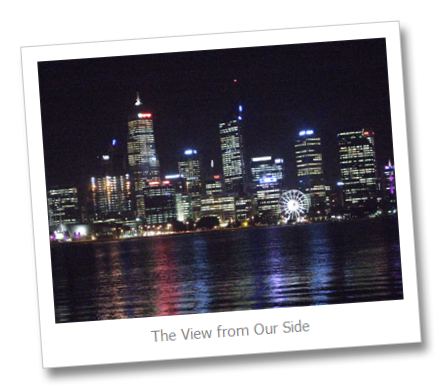
Night time views across the water aren’t too shabby either. Just imagine the new promenade running along the water’s edge from the Bellhouse cafe at Mends Street, after a restaurant dinner, walking arm- in- arm on a summer evening- idyllic. Could we even take a ride on the Ferris wheel and watch moonrise over the hills?

We are undergoing so much change and what amazes me is how well it is happening. People are using imagination, their experience from other lands and so many spirited conversations. With twenty one Councils along the river shores we seem to be managing pretty good co- ordination.

I really have lost count of how many public meetings, conversations and forums I’ve attended, around the topic of our way forward. People of South Perth are beginning to shape the future the way they see it, imagining possibilities, other realities and looking for opportunities.

For years we have been wary of change, sometimes doing nothing, at no cost, every day and never risking criticism. What a spirited experience this is, being part of making the future of our city.

Our community is thinking as a whole City, not just as local neighbourhoods. Exciting things are happening, from Mill Point to Manning, Canning Bridge to Kensington. Our city is developing for the benefit of all, including the million visitors every year. One more challenge is to find new ways to offer services to these visitors so the City benefits from the economic activity.

We have so many opportunities available. There is a general feeling that doing nothing has been comfortable for years but it means opportunities lost

By doing the things that continue to make South Perth a vibrant, exciting and safe place to be we are attracting more bright and alive minds who will go on to imagine and create new futures right here.

I love this place.

Wednesday, 7 April 2010

Canning Bridge Communication

Here is a cutting from today’s West. To open the article you can click on it twice to view in full size.

The West on-line is at http://au.news.yahoo.com/thewest

The future of our community is very much in focus now. Over the past three years we have had many public meetings, workshops, forums, meetings, seminars and barbecues around this topic. The way that we communicate is what keeps us together and moves us on.

What is clear is that there are many different opinions around the way that Como develops. Some opinions are certainly very strong. What has been outstanding is the way that people speak of their case, with respect and clarity. Similarly, people listen and respond to arguments. There has been little or no demand that this or that point of view must be accepted by all. That is not to say that there haven’t been moments of high emotion :-)

My belief is that it is how effectively we communicate that will most influence our future.

Thursday, 1 April 2010

Comment on Canning Bridge Submissions

This week the submissions on the Vision for Canning Bridge closed. Many in the community have made their feelings known. Some that I have heard or read involve objections to particular components, suggestions for alternatives, critiques of the philosophy of TODs, calls for more study, calls for a halt to development, calls for more rapid development, attention to sustainability and much other besides.

This week’s newspapers have been full of the latest growth analyses. Two meetings that I have details from involved:

  • figures for new developments such as five new industrial areas and two more ports south from Perth
  • a billion dollars of development expenditure along the south- west corridor, every year for twenty years
  • expansion of Karratha to one hundred thousand people
  • expansion to fifty thousand of many other towns, such as Newman

Many people are very concerned about how we maintain values related to environmental diversity, energy use, water and food supply, community connectedness and more.

In the midst of all this we see Dr Janet Woollard’s public submission. This could be summarised as follows:

  • One should not have a Vision for the future until all past thinking, developed on the basis of past reality, has been fully implemented and is functioning as planned.

Unfortunately this misses the point that times have changed, that we have a new reality, new risks and new opportunities. It also misses the bit about essential human values and caring for our country.

This does not mean that we have to be pro- development at all costs. It does mean that we should all be engaged in shaping the future while being conscious of our values.

The residents of Como, Applecross and the whole precinct of Canning Bridge are demonstrating that they are very prepared to get involved, to make certain that they contribute to the way that our neighbourhood moves to the future.

Curtin town planning lecturer and local resident, Julie Brunner, has made a very thoughtful and detailed submission which exemplifies this approach. Julie has pulled together the myriad threads that contribute to making a local community plan work for the benefit of people who live here.

Keep up the good work in Como. Have your say by clicking on ‘Comments’ below.

Monday, 29 March 2010

Como Barbecue: Thank You

Thank you to everyone who made today’s event.

The motivation for the barbecue is my hope that we talk with each other, that we have useful conversation.

Our city is changing, rapidly. One of the hot spots of this change is around Como and Canning Bridge. Como is a magnificent place to live. I hope that in fifty years time it is still outstanding and our grandchildren say “Thank goodness they planned for our future”

Yes, there are things that other people can do for us. We can talk about that. Mainly I hope that we have conversation about what we can do for and with each other, connecting our community.

Much was expressed today. I heard about people’s need for safety, both physical and financial. I heard concerns about overshadowing and parking. There were worries about effects on species diversity, river bank protection and the need to connect ecosystems. The effects of population growth were discussed. Some people felt that equity between suburbs was important, others that transport to the airport was a big issue. Possible changes to Council Rates were at the front of some people’s minds.

After the event Lyn MacLaren from Greens WA spent about an hour with me, on a walking inspection of the Canning Bridge area.

There is sure to be much more to talk about. One of the next events will be a seminar with a respected international consultant on city design.

As always, just click on ‘Comments’ to have your say.

Thursday, 25 March 2010

Como Barbecue, Sunday, 28 March, 1 p.m.

So many responses from people coming to the barbecue at McDougall Park on Sunday. Dozens of people have emailed and phoned. Steve Irons, John McGrath and Lynn MacLaren, our local members of Federal and State Parliaments will be there, with the Mayor James Best, Deputy Mayor Sue Doherty plus Glen Cridland and myself, your ward Councillors.

I hope for a lot of conversation about what is happening in our suburb, about what we can do, ourselves, to make this an even better place to live. Yes, there will be things that we believe someone else should do, and we’ll have a conversation about these too.

Sculpture on the Beach at Cottesloe recently was a lot of fun. That community has done something special to make their community stand out. I found the ideas and the experience inspirational.

At a community forum on the Melville side of the bridge last night so many people came up with ideas about what they could do personally to make this area even better. To follow up on this we’ll be building a FaceBook site around the statement “What I did today to make a difference.”

Have your say by clicking on Comments, below. No need to log in, you can just use the ‘Anonymous’ or ‘Name’ options if you prefer.

Tuesday, 16 March 2010

Open Government

At Sunday’s community meeting a number of people made comments about the Council being secretive and about the difficulties of finding information. While I personally feel these comments were unfair and that many people had not looked very hard, I think that we can manage our information access better.

Our Council, like most, has a commitment to be ‘open and accountable.’ However, does this go much past having a register of how Councillors voted on issues?

Open government is the political idea which holds that the business of government should be opened at all levels to effective public scrutiny and oversight. Open government is widely seen to be a key hallmark of contemporary democratic practice. (Thanks Wiki).

Along with providing more access to data goes a corresponding concern for protecting citizens' privacy so they are not exposed to "adverse consequences, retribution or negative repercussions".

On his first full day in office, President Obama issued an Executive Order and several memoranda on transparency and participation in the Federal Government. “My Administration is committed to creating an unprecedented level of openness in Government,” Obama indicated. “The Government should not keep information confidential merely because public officials might be embarrassed by disclosure, because errors and failures might be revealed, or because of speculative or abstract fears.” He added: “In the face of doubt, openness prevails. Agencies should take affirmative steps to make information public. They should not wait for specific requests. All agencies should use modern technology to inform citizens about what is known and done by their Government.”

Should we be actively putting more of our information on- line: building application details, legal challenges, policy documents, financials, SAT hearings, restaurant health inspection data, clinic attendance numbers, street tree and park bench locations and so on, to a much greater degree?

A key point is putting the information out there, even if we don’t know how someone could use it.

The US lead the way with FOI legislation, known as ‘sunshine laws’. Australia followed suit in 1982 and WA in 1992. This is good, but really, if we are going to give away information under FOI why not be pro- active and get it out there anyway?

There is a very good example of E-Gov openness at data.gov

Can we do this better? Have your say by clicking on “Comments” below.